In "You Cannot Escape First Principles" (Mere Orthodoxy, October 15), Jake Meador argues that Yoram Hazony's first principles are antithetical to Christian justice. Those principles are a nation grown from families and tribes, a state that guards the nation's religion and heritage, and a rule against meddling in other nations' affairs. Meador concludes that they reduce politics to "who, whom" and amount to a right-wing Leninism. Every one of those principles is a commonplace of Reformed political theory, held by men who bound power to law more tightly than the post-war liberalism Meador offers in their place. The charge of Leninism lands on Geneva, Herborn and Zurich, and it misses.
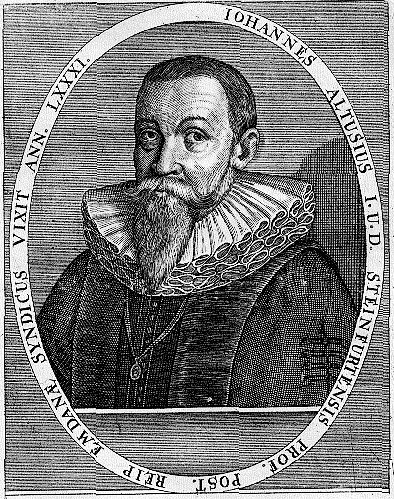
Begin with the nation. Meador presents Hazony's account of families joining into clans and clans into a people as phenomenology, a description of how people happen to bond, and he implies it has no standing in Christian thought. It is the architecture of the Politica of Johannes Althusius, the most systematic political work the Reformed churches produced. Althusius builds upward from the household through hamlet and village to the city, "a multitude of hamlets or villages united by a distinctive law," until "several cities and even provinces joined together received their king or supreme magistrate."1 Bartholomaeus Keckermann explained why the citizen's duty to his country outranks even his duty to his parents: "to the magistrate and the fatherland we are obligated by a threefold bond, namely: 1. of humanity, 2. of kinship, since the commonwealth contains the welfare of our relatives; and finally, by the special covenant and oath which we have rendered to the magistrate and fatherland as good citizens."2 Calvin found the same order in Paul's sermon at Athens: "men are placed upon earth, that every people may be content with their bounds."3
Hazony defines a nation by shared heritage, language and religion. That definition sits comfortably inside Keckermann's three bonds. It is not a modern invention smuggled into the church. It is the church's own account of the commonwealth, which Meador has mistaken for a novelty because the post-war writers he relies on stopped teaching it.
Next, religion. Meador treats a state that names religion as part of the national heritage as a danger in itself, a short step from harassing minorities. The Reformers thought the opposite: a commonwealth that ignored religion had already failed. Calvin: "no polity can be successfully established unless piety be its first care, and that those laws are absurd which disregard the rights of God, and consult only for men." Princes "may be ashamed of their heartlessness if they make it not their care."4 Bullinger went further. He said those who deny princes the care of religion "do seek and bring in the confusion of all things, the dissolution of princes and their people, and lastly, the neglecting and oppression of the poor."5 On this view, the neglect of religion is what harms the weak, not its establishment.
That did not make the Reformed magistrate a persecutor. Althusius would bar "heretics or atheists" from public office, which no liberal would allow. Yet he also held that faith "in no way can or will be coerced," that it "must be persuaded, not commanded; taught, not decreed," and that "the persecutions of Christians have always been the cause of the greatest evils. Whoever therefore desires to have a tranquil kingdom, let him abstain from persecutions."6 Meador thinks that once religion is national, nothing can stop Hindu nationalists from burning churches. Althusius stops them, and he does it without conceding the liberal premise that the commonwealth must be neutral about God.
Third, the alleged absence of moral controls. Meador's central claim is that a nation-first order binds the majority by nothing except its shared identity, so that politics becomes a contest of power. The Reformed nation was bound by law from top to bottom, and the tradition said so in terms Lenin would have despised. Althusius: "He who sets the law above the commonwealth sets God above it; but he who sets a man above it, sets one beneath God.... Therefore the magistrate is bound by the law."7 Calvin did not leave that limit to the prince's conscience. He assigned the lesser magistrates the duty to restrain the greater, and if they "connive at kings when they tyrannize and insult over the humbler of the people," then "their dissimulation is not free from nefarious perfidy, because they fraudulently betray the liberty of the people."8 The humble are protected by law and by officers sworn to enforce it. Liberal rights theory was not needed.
This also answers the charge that a "Christian prince" is despotic by definition. In this tradition the prince is a creature of law, with officers set over him whose duty is to stop him. Meador's syllogism, anti-liberal and therefore despotic, would convict the Reformed churches of the sixteenth and seventeenth centuries wholesale.
Which leaves Meador's own standard. He measures Hazony against Christian ideas of dignity and justice as post-war intellectuals articulated them. A standard dated to 1945 is a standard set by whoever held the pen in 1945, and that is far closer to "who, whom" than anything in Althusius. The Reformers did not locate justice in a settlement. Calvin: "Equity, as it is natural, cannot but be the same in all, and therefore ought to be proposed by all laws.... Hence it alone ought to be the aim, the rule, and the end of all laws."9 A nation that tramples equity is condemned by a law older than any charter, and a nation that keeps it needs no international committee's approval.
The tradition does not give Hazony everything. His rule of non-interference is stated more absolutely than the Reformed writers would allow. Grotius accepts the default and cites Procopius: "It is more agreeable to the rules of equity, that every man should carefully govern his own Province, and not trouble himself with the affairs of others." Then he limits it: "they hold not in case Subjects apparently groan under such Tyrannies, as no just man can approve of."10 But the tradition guarded that exception jealously. The Vindiciae contra tyrannos, which defends intervention against tyranny, opens its argument by warning that "the Romans, Alexander the great, and divers others, pretending to suppresse Tyrants, have oftentimes enlarged their own limits."11 That is Hazony's own fear about empire, stated four centuries earlier. The Reformed position is stricter than Hazony's, because it admits a narrow exception for manifest tyranny. It is also stricter than the post-war order Meador praises, because it treats every humanitarian pretext as a likely mask for conquest.
Meador ends by calling liberal democracy the Golden Rule applied to common life. Althusius had already put the Golden Rule at the foundation of the commonwealth of households: "the sum of the second table: You shall love your neighbor as yourself; what you wish to be done to you, do also to another." He defined ruling as "nothing other than to serve and attend to the benefits of others."12 Meador's standard, once the sources are on the table, turns out to be a recent settlement, and the principles he calls Leninist turn out to be Reformed. Christians who want to judge national conservatism should judge it by Althusius and Calvin, not by 1945.
Notes
- Johannes Althusius, Politica methodice digesta, passage 242893. Read ↩
- Bartholomaeus Keckermann, Systema Ethicae, passage 506353. Read ↩
- John Calvin, Commentary on Acts, vol. 2, on Acts 17, passage 125134. Read ↩
- John Calvin, Institutes of the Christian Religion, IV.20.9. Read ↩
- Heinrich Bullinger, The Decades, Second Decade, Seventh Sermon, p. 324. Read ↩
- Johannes Althusius, Politica methodice digesta, passage 243067. Read ↩
- Johannes Althusius, Politica methodice digesta, passage 242993. Read ↩
- John Calvin, Institutes of the Christian Religion, IV.20.31. Read ↩
- John Calvin, Institutes of the Christian Religion, IV.20.16. Read ↩
- Hugo Grotius, De Jure Belli ac Pacis, II.25.8, p. 425. Read ↩
- Stephen Junius Brutus, Vindiciae contra tyrannos, Fourth Question, p. 135. Read ↩
- Johannes Althusius, Politica methodice digesta, passage 242870. Read ↩